
Chandrayaan-3: ISRO Shares Clip Of Pragyan Rover 'Frolicking' On Lunar Surface
PTI | Sep 01, 2023, 17:20 IST
The space agency released a video showing an automated hinge mechanism rotating the 18 cm tall APXS, aligning the detector head to be approximately five centimetres in proximity to the lunar surface.

Image credit : ISRO
ISRO on Thursday used a mother-child reference and a term for the Moon most Indians have a nostalgic connect with - 'chandamama' - to inform the progress of the Chandrayaan-3 mission.
Another instrument onboard the Chandrayaan-3 mission's rover 'Pragyan' has confirmed the presence of sulphur in the lunar region by deploying a different technique, ISRO said on Thursday.
![Chandrayaan-3: ISRO Shares Clip Of Pragyan Rover 'Frolicking' On Lunar Surface]()
What caught the eye of many on X, formerly Twitter, was the mother-child mention by ISRO's official handle.
"The rover was rotated in search of a safe route. The rotation was captured by a Lander Imager Camera. It feels as though a child is playfully frolicking in the yards of Chandamama, while the mother watches affectionately. Isn't it?" ISRO said in the post.
The space agency released a video showing an automated hinge mechanism rotating the 18 cm tall APXS, aligning the detector head to be approximately five centimetres in proximity to the lunar surface.
ISRO further said the Alpha Particle X-ray Spectroscope (APXS) has detected sulphur, as well as other minor elements on the Moon. "This finding by Ch-3 compels scientists to develop fresh explanations for the source of Sulphur (S) in the area: intrinsic?, volcanic?, meteoritic?......?" read the post.
The Laser Induced Breakdown Spectroscope (LIBS) instrument onboard the rover has already confirmed the presence of sulphur. Detailed scientific analysis of these observations are in progress.
Also read: Chandrayaan-3: Pragyan Rover Records Unexplained Natural Event On Moon's South Pole
The 26-kg, six-wheeled, solar-powered Pragyan rover is equipped to use its scientific instruments to record what the lunar soil and rocks are made of in the south polar region where Chandrayaan-3 landed and it would also show how the readings contrast with that of the highland regions.
APXS instrument is best suited for in-situ analysis of the elemental composition of soil and rocks on the surface of planetary bodies having little atmosphere, such as the Moon, an ISRO statement said.
![Chandrayaan-3: ISRO Shares Clip Of Pragyan Rover 'Frolicking' On Lunar Surface]()
It carries radioactive sources that emit alpha particles and X-rays onto the surface sample. The atoms present in the sample in turn emit characteristic X-ray lines corresponding to the elements present. By measuring the energies and intensities of these characteristic X-rays, researchers can find the elements present and their abundances.
Also read: Chandrayaan-3's Pragyan Rover Finds Oxygen, Sulphur, And Other Elements On The Moon
APXS observations have discovered the presence of interesting minor elements, including sulphur, apart from the major expected elements such as aluminum, silicon, calcium and iron.
![Chandrayaan-3: ISRO Shares Clip Of Pragyan Rover 'Frolicking' On Lunar Surface]()
APXS has been developed by the Physical Research Laboratory (PRL), Ahmedabad, with support from the Space Application Centre (SAC) Ahmedabad, whereas UR Rao Satellite Centre (URSC), Bengaluru has built the deployment mechanism, it was stated. For more in the world of technologyandscience, keep readingIndiatimes.com.
Another instrument onboard the Chandrayaan-3 mission's rover 'Pragyan' has confirmed the presence of sulphur in the lunar region by deploying a different technique, ISRO said on Thursday.
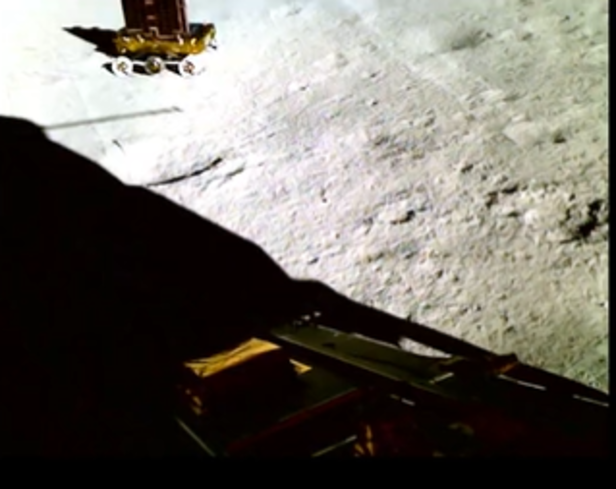
Image credit : ISRO
What caught the eye of many on X, formerly Twitter, was the mother-child mention by ISRO's official handle.
Watch Pragyan rover in action
"The rover was rotated in search of a safe route. The rotation was captured by a Lander Imager Camera. It feels as though a child is playfully frolicking in the yards of Chandamama, while the mother watches affectionately. Isn't it?" ISRO said in the post.
Chandrayaan-3 Mission:
— ISRO (@isro) August 31, 2023
The rover was rotated in search of a safe route. The rotation was captured by a Lander Imager Camera.
It feels as though a child is playfully frolicking in the yards of Chandamama, while the mother watches affectionately.
Isn't it?🙂 pic.twitter.com/w5FwFZzDMp
The space agency released a video showing an automated hinge mechanism rotating the 18 cm tall APXS, aligning the detector head to be approximately five centimetres in proximity to the lunar surface.
ISRO further said the Alpha Particle X-ray Spectroscope (APXS) has detected sulphur, as well as other minor elements on the Moon. "This finding by Ch-3 compels scientists to develop fresh explanations for the source of Sulphur (S) in the area: intrinsic?, volcanic?, meteoritic?......?" read the post.
Chandrayaan-3 Mission:
— ISRO (@isro) August 31, 2023
In-situ Scientific Experiments
Another instrument onboard the Rover confirms the presence of Sulphur (S) in the region, through another technique.
The Alpha Particle X-ray Spectroscope (APXS) has detected S, as well as other minor elements.
This… pic.twitter.com/lkZtz7IVSY
The Laser Induced Breakdown Spectroscope (LIBS) instrument onboard the rover has already confirmed the presence of sulphur. Detailed scientific analysis of these observations are in progress.
Also read: Chandrayaan-3: Pragyan Rover Records Unexplained Natural Event On Moon's South Pole
The 26-kg, six-wheeled, solar-powered Pragyan rover is equipped to use its scientific instruments to record what the lunar soil and rocks are made of in the south polar region where Chandrayaan-3 landed and it would also show how the readings contrast with that of the highland regions.
APXS instrument is best suited for in-situ analysis of the elemental composition of soil and rocks on the surface of planetary bodies having little atmosphere, such as the Moon, an ISRO statement said.
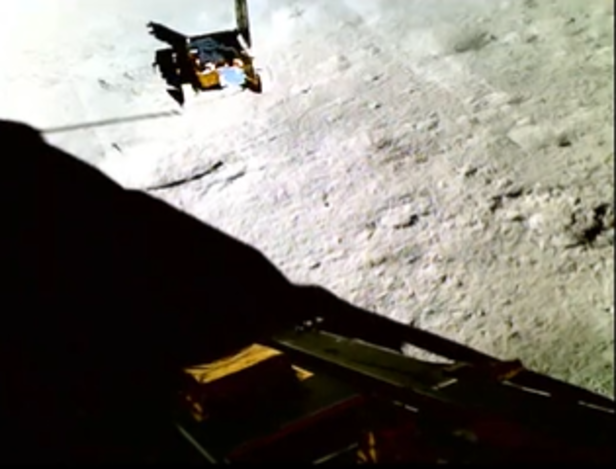
Image credit : ISRO
It carries radioactive sources that emit alpha particles and X-rays onto the surface sample. The atoms present in the sample in turn emit characteristic X-ray lines corresponding to the elements present. By measuring the energies and intensities of these characteristic X-rays, researchers can find the elements present and their abundances.
Also read: Chandrayaan-3's Pragyan Rover Finds Oxygen, Sulphur, And Other Elements On The Moon
APXS observations have discovered the presence of interesting minor elements, including sulphur, apart from the major expected elements such as aluminum, silicon, calcium and iron.
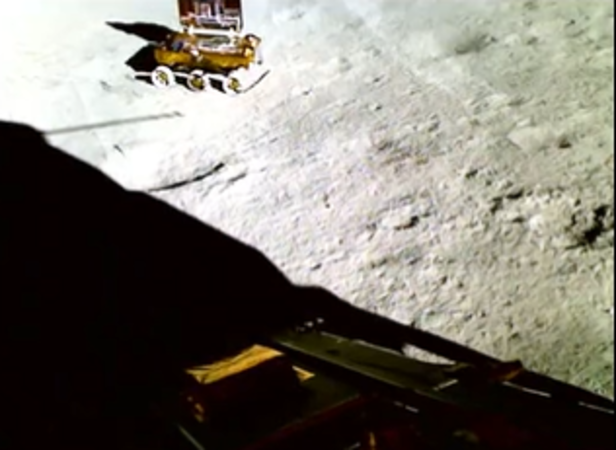
Image credit : ISRO
APXS has been developed by the Physical Research Laboratory (PRL), Ahmedabad, with support from the Space Application Centre (SAC) Ahmedabad, whereas UR Rao Satellite Centre (URSC), Bengaluru has built the deployment mechanism, it was stated. For more in the world of technologyandscience, keep readingIndiatimes.com.
Is AI plotting against humans? 5 Moltbook myths that has everyone freaking out
By Garima Satija

IITian selling pani puri in London isn't a downgrade
By Sneha Kumari

US teacher faces backlash after ICE call on student
By Simran Guleria

5 world records Colby Raha broke that redefine motocross
By Sneha Kumari

Celebrities slam NYC mayor over slow snow cleanup
By Simran Guleria

Single’s Inferno 5’s Samuel Lee sparks chaebol rumours
By Shivani Negi

Baklava vs Paklava: A sweet tale of two pastries
By Sneha Kumari
