
Budget 2026 makes a big Rare Earth bet—Here’s why four states are key to India’s EV, defence and clean energy plans
Nancy Jaiswal | Feb 02, 2026, 15:34 IST
Union Budget 2026 proposes dedicated Rare Earth Corridors across Odisha, Kerala, Andhra Pradesh, and Tamil Nadu to boost mining, processing, research, and magnet manufacturing, strengthening India’s self-reliance in critical minerals for EVs, defence, and clean energy.

Image credit : Indiatimes | Budget 2026 pushes Rare Earth corridors in four states
Union Budget 2026 has placed rare earth minerals at the centre of India’s industrial and strategic planning. Finance Minister Nirmala Sitharaman announced government support for setting up dedicated Rare Earth Corridors across four mineral-rich states—Odisha, Kerala, Andhra Pradesh, and Tamil Nadu. The proposal builds on earlier policy measures and aims to strengthen mining, processing, research, and manufacturing of rare earth elements that are critical to clean energy, defence, electronics, and advanced manufacturing.
During her Budget 2026 speech, Finance Minister Nirmala Sitharaman said the Centre would support Odisha, Kerala, Andhra Pradesh, and Tamil Nadu in establishing dedicated Rare Earth Corridors. The objective is to promote an integrated ecosystem covering mining, processing, research, and manufacturing of rare earth materials.
![India’s self-reliance depends on critical minerals for EVs]() This announcement follows the launch of the Scheme for Rare Earth Permanent Magnets in November 2025. The corridors are intended to create focused industrial zones in states that already possess significant rare earth resources, enabling smoother movement from extraction to high-value manufacturing.
This announcement follows the launch of the Scheme for Rare Earth Permanent Magnets in November 2025. The corridors are intended to create focused industrial zones in states that already possess significant rare earth resources, enabling smoother movement from extraction to high-value manufacturing.
Rare Earth Elements (REEs) include 17 metallic elements—15 lanthanides along with scandium and yttrium. While these elements are not scarce in the Earth’s crust, they are rarely found in concentrated and economically viable deposits, and separating them chemically is complex.
REEs are often described as the “Vitamins of Modern Industry” because even small quantities significantly improve performance across advanced technologies. Their magnetic, luminescent, and electrochemical properties make them essential in multiple sectors.
In clean energy and green technology, elements such as neodymium and dysprosium are key inputs for permanent magnets used in electric vehicle motors and wind turbines. In consumer electronics, REEs are used in smartphone speakers, vibration units, screens, computer hard drives, and LED lighting, with yttrium and europium responsible for red and blue colours in displays.
They are also critical in national defence applications, including radar systems, precision-guided missiles, sonar, and jet engines. In healthcare, REEs support MRI contrast agents, PET scanners, and medical lasers. Industrial uses include petroleum refining catalysts and high-strength, corrosion-resistant alloys.
Rare earth elements are categorised as critical minerals because many of their applications do not have equal substitutes. China currently dominates the global supply chain, accounting for about 70% of production and more than 85% of refining capacity.
This concentration has led countries such as India, the United States, and members of the European Union to invest in diversifying supply chains. India’s focus on domestic corridors reflects efforts to reduce vulnerability to geopolitical risks and strengthen long-term self-reliance.
India’s rare earth potential is concentrated largely along its coastline due to extensive monazite deposits. Monazite is a reddish-brown phosphate mineral containing rare earth elements such as cerium, lanthanum, and neodymium, along with radioactive thorium. These deposits are found in placer sands as well as igneous and metamorphic rocks.
![Finance Minister Nirmala Sitharaman]() Andhra Pradesh holds the largest share, with 3.78 million tonnes of monazite spread across 24 deposits. Visakhapatnam is the country’s most significant hub for rare earth magnets. The Rare Earth Permanent Magnet Plant at the Bhabha Atomic Research Centre campus in Visakhapatnam is India’s first dedicated facility producing samarium-cobalt and neodymium-iron-boron magnets using indigenous technology and domestic raw materials. The state is moving beyond mining into downstream processing and magnet manufacturing.
Andhra Pradesh holds the largest share, with 3.78 million tonnes of monazite spread across 24 deposits. Visakhapatnam is the country’s most significant hub for rare earth magnets. The Rare Earth Permanent Magnet Plant at the Bhabha Atomic Research Centre campus in Visakhapatnam is India’s first dedicated facility producing samarium-cobalt and neodymium-iron-boron magnets using indigenous technology and domestic raw materials. The state is moving beyond mining into downstream processing and magnet manufacturing.
Odisha has 3.16 million tonnes of monazite across 12 major deposits, including Gopalpur and Chhatrapur. The state is focusing on developing magnet technologies for defence, space, electric vehicles, and related sectors.
Tamil Nadu possesses 2.47 million tonnes of monazite distributed across 50 deposits, notably in Manavalakurichi beach sand and Sathankulam Teri sand areas. These resources are being developed to support an end-to-end magnet value chain.
![Odisha has 3.16 million tonnes of monazite]() Kerala has 1.84 million tonnes of monazite across 35 deposits, with major concentrations along the Chavara barrier beach. The state is using its extensive beach sand minerals to enable refined rare earth extraction and magnet production.
Kerala has 1.84 million tonnes of monazite across 35 deposits, with major concentrations along the Chavara barrier beach. The state is using its extensive beach sand minerals to enable refined rare earth extraction and magnet production.
Midwest Advanced Materials is setting up a Neodymium-Iron-Boron magnet manufacturing facility in Hyderabad with support from the Technology Development Board.
In November 2025, the Union Cabinet approved the Scheme to Promote Manufacturing of Sintered Rare Earth Permanent Magnets with a financial outlay of Rs 7,280 crore. The initiative aims to establish 6,000 metric tonnes per annum of integrated REPM manufacturing capacity in India, strengthening domestic production and positioning India in the global magnet market.
Industry representatives said the Budget 2026 proposals would accelerate technology development.
Budget 2026 proposal on Rare Earth corridors
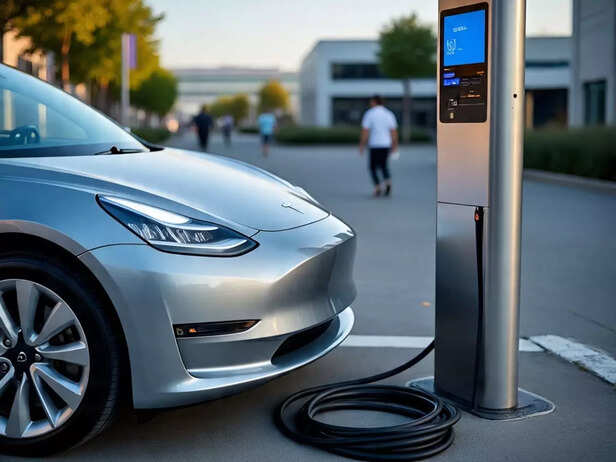
Image credit : AI generated | India’s self-reliance depends on critical minerals for EVs
Why rare earth elements are critical to modern industry
REEs are often described as the “Vitamins of Modern Industry” because even small quantities significantly improve performance across advanced technologies. Their magnetic, luminescent, and electrochemical properties make them essential in multiple sectors.
In clean energy and green technology, elements such as neodymium and dysprosium are key inputs for permanent magnets used in electric vehicle motors and wind turbines. In consumer electronics, REEs are used in smartphone speakers, vibration units, screens, computer hard drives, and LED lighting, with yttrium and europium responsible for red and blue colours in displays.
They are also critical in national defence applications, including radar systems, precision-guided missiles, sonar, and jet engines. In healthcare, REEs support MRI contrast agents, PET scanners, and medical lasers. Industrial uses include petroleum refining catalysts and high-strength, corrosion-resistant alloys.
Global dominance and India’s strategic push
This concentration has led countries such as India, the United States, and members of the European Union to invest in diversifying supply chains. India’s focus on domestic corridors reflects efforts to reduce vulnerability to geopolitical risks and strengthen long-term self-reliance.
Rare earth resources across the four corridor states

Image credit : X/Nsitharaman01 | Finance Minister Nirmala Sitharaman
Odisha has 3.16 million tonnes of monazite across 12 major deposits, including Gopalpur and Chhatrapur. The state is focusing on developing magnet technologies for defence, space, electric vehicles, and related sectors.
Tamil Nadu possesses 2.47 million tonnes of monazite distributed across 50 deposits, notably in Manavalakurichi beach sand and Sathankulam Teri sand areas. These resources are being developed to support an end-to-end magnet value chain.
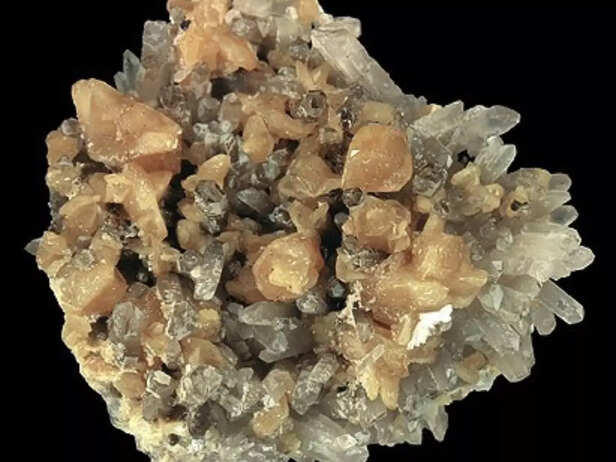
Image credit : Wikipedia | Odisha has 3.16 million tonnes of monazite
Related schemes and industry response
In November 2025, the Union Cabinet approved the Scheme to Promote Manufacturing of Sintered Rare Earth Permanent Magnets with a financial outlay of Rs 7,280 crore. The initiative aims to establish 6,000 metric tonnes per annum of integrated REPM manufacturing capacity in India, strengthening domestic production and positioning India in the global magnet market.
Industry representatives said the Budget 2026 proposals would accelerate technology development.
Is ‘flow state’ the new self-care era?
By Saloni Jha

Is Brooklyn Beckham’s ex Hana Cross now dating Nicola Peltz brother Bradley?
By Nillohit Bagchi

The ‘Who was with you at your lowest’ trend explained
By Iraa Paul

Viral story: Indian family clears lemon theft claims online
By Simran Guleria

Is Moltbook fake? The AI agents forum exposed
By Nillohit Bagchi

Is Miley Cyrus 'obsessed' with ex-husband Liam Hemsworth?
By Karen Noronha

Chinese man extracts gold from e-waste, calls it ‘skill’
By Simran Guleria
