
Is ‘flow state’ the new self-care era? Why we cannot stop romanticising focus
Saloni Jha | Feb 03, 2026, 09:40 IST
From viral “crispy coke” videos to real psychology, flow state might be 2026’s calmest flex yet.

Image credit : Indiatimes | The latest trend making the rounds on social media? Reaching the “flow state."
Every January, the internet wakes up with a wellness hangover and decides this is the year everything changes. New planners. New habits. New personality. And now, apparently, a new mental setting: flow state.
Scroll through social media and you will find endless videos of creators declaring they have “entered their flow state.” The visual formula is oddly specific. A neatly arranged spread of comfort food. A towering iced drink. A crisp can of cola dramatically opened. Headphones in. World out. Caption: “Finally in my flow.”
It feels theatrical, almost tongue-in-cheek. A parody of productivity culture. But beneath the memes and aesthetic snack trays, the term itself is not a joke. Flow is a legitimate psychological concept. And if the internet is suddenly obsessed with it, there might be a reason deeper than crispy beverages.
![Freepik | What flow state really means is that you are in a state of ‘one mindfulness.']()
Contrary to what viral clips might suggest, flow is not a glittery, euphoric high. It is not productivity on steroids. It is not a glamorous hustle mode.
Psychologically, flow refers to a state of total absorption in an activity. Attention narrows. Self-consciousness fades. Worries quiet down. A person becomes fully tuned in to the task at hand. It is sometimes described as a form of “one mindfulness”, where the mind is not multitasking or spiralling but simply immersed.
Experts explain that social media tends to exaggerate flow as something explosive and dramatic. In reality, it is subtle. Quiet. Grounded. It is less fireworks, more steady flame.
![Freepik | Social media makes it sound like a euphoric state, but is it really?]()
It also differs from overdrive. Overdrive is tense, urgent, fuelled by adrenaline. Flow, by contrast, does not strain the nervous system. It does not demand burnout in exchange for results. It is focus without frenzy.
In many ways, it might function as a self-soothing state. When someone is deeply engaged in cooking, drawing, coding, running, or even organising their desk, intrusive thoughts tend to soften. The mind gets a break from constant internal commentary.
That sounds less like a trend and more like a survival tool.
From crispy coke to consciousness
It feels theatrical, almost tongue-in-cheek. A parody of productivity culture. But beneath the memes and aesthetic snack trays, the term itself is not a joke. Flow is a legitimate psychological concept. And if the internet is suddenly obsessed with it, there might be a reason deeper than crispy beverages.

Image credit : Freepik | What flow state really means is that you are in a state of ‘one mindfulness.'
What flow actually means (and what it does not)
Psychologically, flow refers to a state of total absorption in an activity. Attention narrows. Self-consciousness fades. Worries quiet down. A person becomes fully tuned in to the task at hand. It is sometimes described as a form of “one mindfulness”, where the mind is not multitasking or spiralling but simply immersed.
Experts explain that social media tends to exaggerate flow as something explosive and dramatic. In reality, it is subtle. Quiet. Grounded. It is less fireworks, more steady flame.

Image credit : Freepik | Social media makes it sound like a euphoric state, but is it really?
It also differs from overdrive. Overdrive is tense, urgent, fuelled by adrenaline. Flow, by contrast, does not strain the nervous system. It does not demand burnout in exchange for results. It is focus without frenzy.
In many ways, it might function as a self-soothing state. When someone is deeply engaged in cooking, drawing, coding, running, or even organising their desk, intrusive thoughts tend to soften. The mind gets a break from constant internal commentary.
That sounds less like a trend and more like a survival tool.
Why everyone suddenly wants it
Tired of constant notifications. Tired of being reachable 24/7. Tired of half-watching three things while texting two people and thinking about twelve unfinished tasks. Modern life has trained brains to fracture attention into microscopic pieces.
In that context, flow feels almost rebellious.
Mental health professionals note that the desire for flow is often a desire to be present. It reflects a craving to reduce chaos and restore balance. When the nervous system is regulated and not overloaded, flow tends to emerge naturally. It cannot be forced. It appears when conditions are right.
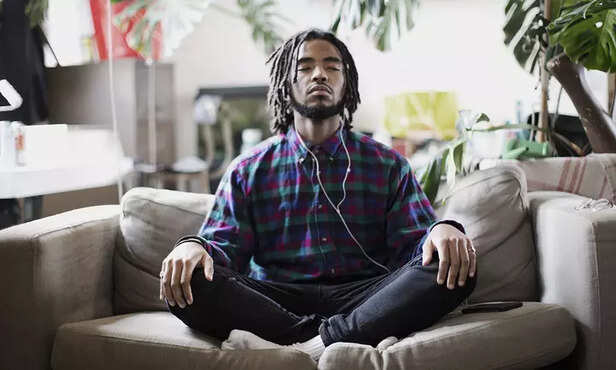
Image credit : Wymanforum| It’s more like being so absorbed in the moment that any thoughts about yourself sort of float away.
Yet online, it is framed like an achievement badge. Something to “enter” dramatically. Something to post about.
There is irony in performing presence for an audience. But perhaps that is how the internet processes everything now: first as content, then as coping.
The performance of focus
But beneath the humour lies something telling. In a culture obsessed with overstimulation, the idea of zeroing in on one thing feels almost heroic.
Focus has become rare. Deep engagement feels like a luxury. So when someone films themselves “locking in”, audiences respond as if witnessing a rare feat.
The internet may overblow it, but the hunger for it is real.

Image credit : walkingwounded| It may function, for some people, as a self-soothing mechanism—especially in today’s crazy world.
Is flow the self-care of 2026?
It asks for presence.
Self-care has often been packaged as indulgence: candles, face masks, elaborate rituals. Flow shifts the narrative. It suggests that care might look like uninterrupted time. Like immersion. Like choosing depth over distraction.
In a world that monetises attention, protecting it becomes radical.
Personally, it feels refreshing to see a trend that centres stillness instead of spectacle. Even if the spectacle sneaks back in through aesthetic snack videos.
The healthier way to think about it
Chasing it too aggressively defeats the purpose.
Flow is not about becoming hyper-productive. It is about becoming deeply engaged. It can happen during creative work, exercise, studying, gaming, gardening, or even cleaning. The activity matters less than the quality of attention.
In a sense, the trend reveals a cultural pivot. Instead of glorifying constant hustle, people are flirting with absorption. Instead of bragging about busyness, they are experimenting with presence.
And perhaps that is why flow is resonating.

Image credit : tweak| Unlike overdrive, the flow state isn’t meant to stress the body or be productivity on steroids.
A quiet revolution in a loud world
The need to focus. The need to feel less scattered.
The need to exist in one moment at a time.
If 2026 wellness is moving away from extremes and towards regulation, flow makes sense. It is not loud. It is not showy. It does not spike the nervous system.
It softens it. And honestly, in a world that feels perpetually switched on, that might be the most radical self-care move yet.
Is ‘flow state’ the new self-care era?
By Saloni Jha

Is Brooklyn Beckham’s ex Hana Cross now dating Nicola Peltz brother Bradley?
By Nillohit Bagchi

The ‘Who was with you at your lowest’ trend explained: How to create your own reel
By Iraa Paul

Viral story: Indian family clears lemon theft claims online
By Simran Guleria

Is Moltbook fake? The AI agents forum exposed
By Nillohit Bagchi

Is Miley Cyrus 'obsessed' with ex-husband Liam Hemsworth?
By Karen Noronha

Chinese man extracts gold from e-waste, calls it ‘skill’
By Simran Guleria
