
From social media to orbit: Why Elon Musk merged SpaceX, xAI & X to rethink the future of AI compute
Nancy Jaiswal | Feb 03, 2026, 15:07 IST
Elon Musk has brought SpaceX, xAI and X under one structure following a major merger. The move focuses on integrating AI, rockets and satellite networks, with plans for space-based data centres powered by solar energy to support large-scale AI computing.

Image credit : Indiatimes | Elon Musk merges SpaceX, xAI and X in bold AI move
Elon Musk’s business empire has taken a major structural turn with SpaceX now owning X, the social networking platform formerly known as Twitter. This shift follows SpaceX’s acquisition of xAI, Musk’s artificial intelligence company focused on AI labs, models and data centres. The consolidation places social media, artificial intelligence and space technology under a single integrated framework.
Musk had earlier merged xAI and X in May 2025. With SpaceX now absorbing xAI, ownership of X has effectively moved under SpaceX as well. The development marks a significant step in Musk’s long-stated vision of combining advanced AI systems with space-based infrastructure.
SpaceX said the merger with xAI is designed to create a “vertically integrated innovation engine on (and off) Earth.” The idea is to bring together artificial intelligence, rocket technology, space-based internet and direct-to-mobile device communications within a single operational system.
![Elon Musk has brought SpaceX, xAI and X under one structure]() SpaceX’s core expertise lies in space missions and satellite deployment, while xAI focuses on developing artificial intelligence technologies. By merging the two, Musk aims to align AI development directly with space-based hardware and communications networks, creating a unified technology pipeline that operates both on Earth and in orbit.
SpaceX’s core expertise lies in space missions and satellite deployment, while xAI focuses on developing artificial intelligence technologies. By merging the two, Musk aims to align AI development directly with space-based hardware and communications networks, creating a unified technology pipeline that operates both on Earth and in orbit.
xAI is best known for its chatbot Grok, which is already integrated into X. The chatbot operates within the social media platform, giving xAI direct access to large-scale user interaction and data. With SpaceX now involved, the integration expands beyond software into infrastructure and deployment capabilities.
The merger is expected to allow Musk to combine SpaceX’s launch and satellite systems with xAI’s AI technologies. This combination sets the foundation for future data processing and AI workloads that extend beyond terrestrial limits.
One of the key outcomes of the merger is the possibility of building data centres in space. SpaceX recently filed an application with the US Federal Communications Commission (FCC) to create what it described as an “orbital data centre.”
![Elon Musk’s business empire has taken a major structural turn]() The proposal involves launching a constellation of one million satellites. These satellites would operate together to support large-scale data processing in orbit, marking a shift away from relying solely on Earth-based data centres for AI workloads.
The proposal involves launching a constellation of one million satellites. These satellites would operate together to support large-scale data processing in orbit, marking a shift away from relying solely on Earth-based data centres for AI workloads.
Musk said that advances in artificial intelligence increasingly depend on massive terrestrial data centres that require enormous amounts of power and cooling. According to him, these demands are becoming harder to meet efficiently on Earth.
He argued that space-based AI systems could offer a solution by tapping into the Sun’s energy. “The only logical solution, therefore, is to transport these resource-intensive efforts to a location with vast power and space. I mean, space is called ‘space’ for a reason,” Musk said.
Musk said space offers near-constant solar power along with relatively low operating and maintenance costs. He added that satellites have the potential to transform how computing capacity is scaled, particularly for AI workloads that require continuous power availability.
![Musk had earlier merged xAI and X in May 2025]() By operating in orbit, AI systems could reduce dependence on Earth-based power grids and cooling systems, while expanding computing capabilities at a much larger scale.
By operating in orbit, AI systems could reduce dependence on Earth-based power grids and cooling systems, while expanding computing capabilities at a much larger scale.
Musk described the plan to launch a million satellites operating as orbital data centres as a foundational step toward becoming a Kardashev Type II civilisation. Such a civilisation is defined by its ability to harness the full power of the Sun.
He said this approach would support AI-driven applications for billions of people today while also contributing to humanity’s multi-planetary future.
Musk said that within the next two to three years, the lowest-cost way to generate AI compute could be in space. According to him, this shift would enable cost-efficient training of AI models and data processing at unprecedented speed and scale.
The SpaceX-xAI merger, combined with X’s integration, positions Musk’s companies to experiment with this transition as AI infrastructure moves beyond Earth.
Musk had earlier merged xAI and X in May 2025. With SpaceX now absorbing xAI, ownership of X has effectively moved under SpaceX as well. The development marks a significant step in Musk’s long-stated vision of combining advanced AI systems with space-based infrastructure.
SpaceX–xAI merger and the integrated innovation strategy
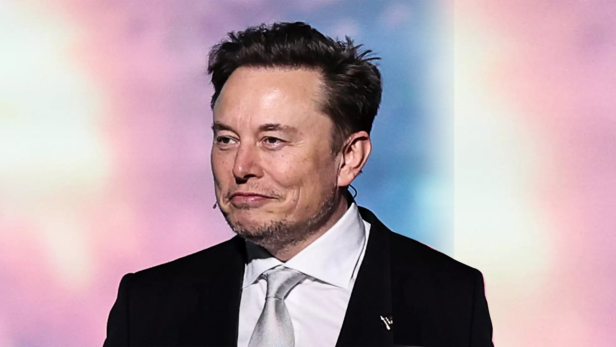
Image credit : X/ElonMuskPD | Elon Musk has brought SpaceX, xAI and X under one structure
xAI, Grok and its existing integration with X
The merger is expected to allow Musk to combine SpaceX’s launch and satellite systems with xAI’s AI technologies. This combination sets the foundation for future data processing and AI workloads that extend beyond terrestrial limits.
Plans for space-based data centres and FCC filing
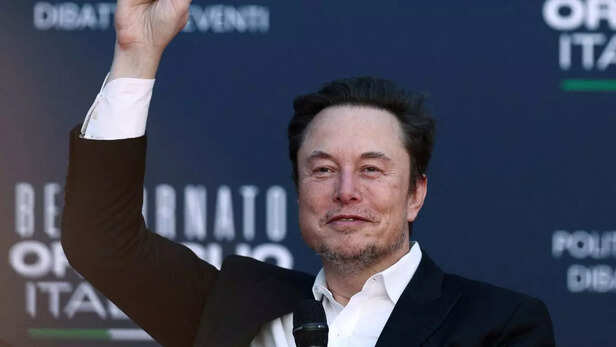
Image credit : X/ElonMuskPD | Elon Musk’s business empire has taken a major structural turn
Musk on AI power demands and the limits of Earth-based systems
He argued that space-based AI systems could offer a solution by tapping into the Sun’s energy. “The only logical solution, therefore, is to transport these resource-intensive efforts to a location with vast power and space. I mean, space is called ‘space’ for a reason,” Musk said.
Near-constant solar power and scalable computing in orbit
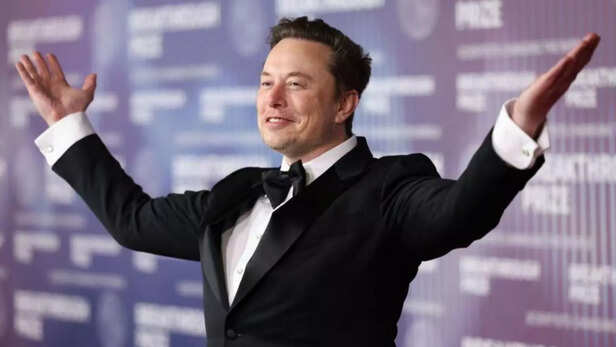
Image credit : X/ElonMuskPD | Musk had earlier merged xAI and X in May 2025
Orbital AI data centres and long-term vision
He said this approach would support AI-driven applications for billions of people today while also contributing to humanity’s multi-planetary future.
AI compute could move to space within years
The SpaceX-xAI merger, combined with X’s integration, positions Musk’s companies to experiment with this transition as AI infrastructure moves beyond Earth.
Elon Musk merges SpaceX, xAI and X in bold AI move
By Nancy Jaiswal

Japanese volleyball players's dramatic apology goes viral
By Bhupinder Singh

Is AI plotting against humans? 5 Moltbook myths that has everyone freaking out
By Garima Satija

IITian selling pani puri in London isn't a downgrade
By Sneha Kumari

US teacher faces backlash after ICE call on student
By Simran Guleria

5 world records Colby Raha broke that redefine motocross
By Sneha Kumari

Celebrities slam NYC mayor over slow snow cleanup
By Simran Guleria
