
What is a soft off day? The viral work trend offering a mental break without taking leave
Saloni Jha | Feb 03, 2026, 16:57 IST
A new workplace trend called the soft off day promises rest without leave as burnout rises among professionals.

Image credit : Freepik | Employees log in as usual, attend key meetings and remain reachable, but deliberately reduce their output to the bare minimum required.
In a work culture that rarely pauses, employees are quietly inventing their own. Enter the “soft off day,” a viral workplace trend that promises mental relief without officially taking time off.
Unlike annual leave or a sick day, a soft off day is not marked on the calendar. There is no out-of-office reply, no formal request to human resources. Instead, employees log in as usual, attend key meetings and remain reachable, but deliberately reduce their output to the bare minimum required. The goal is not laziness. It is preservation.
![Jio Hotstar | Employees log in as usual, attend key meetings and remain reachable, but deliberately reduce their output to the bare minimum required.]()
The idea gained traction after an online creator shared subtle strategies for managing low-energy days while still appearing present and professional. In a digital era where exhaustion is often worn like a badge of honour, the concept has struck a nerve.
A soft off day is essentially a quiet recalibration. The employee shows up, physically or virtually, but intentionally conserves mental energy.
This might mean starting the day slightly later than usual to ease into tasks instead of diving headfirst into pressure. Some choose to schedule or send early emails to create the impression of momentum, reducing the likelihood of follow-up demands later in the afternoon.
Automation also plays a central role. Meetings may be recorded or supported by transcription tools so that information is captured without requiring intense focus throughout. Notes are generated by software, ensuring nothing is missed while allowing the mind to rest.
![Freepik | While a soft off day is not a substitute for proper rest, it can act as a pressure valve.]()
Importantly, boundary-setting becomes non-negotiable. Employees decline additional responsibilities, avoid unnecessary overtime and resist the urge to volunteer for extra projects. The principle is simple: protect energy before it fully depletes.
For remote workers, the strategy can be even more subtle. Staying logged in, responding selectively and maintaining online visibility help avoid scrutiny while scaling back effort.
The popularity of soft off days reflects a broader conversation about burnout. Long hours, constant notifications and blurred boundaries between home and office have left many professionals running on fumes.
A soft off day acknowledges a difficult truth: productivity is not linear. There are days when concentration feels sharp and inspired. There are also days when even minor tasks feel overwhelming. Instead of pushing through exhaustion and risking deeper burnout, employees are choosing controlled slowdowns.
![Freepik | Employees are no longer waiting for organisations to fix systemic stress.]()
Mental health experts have long warned that sustained overwork can lead to emotional fatigue, reduced efficiency and even physical symptoms. While a soft off day is not a substitute for proper rest, it can act as a pressure valve. It allows individuals to remain engaged without spiralling into complete depletion.
The trend also reveals something larger about modern workplaces. Employees are no longer waiting for organisations to fix systemic stress. They are creating micro-adjustments within existing structures.
There is a quiet rebellion in the idea. It challenges the assumption that visibility equals productivity. It questions whether constant intensity is truly sustainable.
![Freepik | Appearing busy while deliberately minimising effort could be perceived as deceptive.]()
At the same time, critics argue that soft off days may blur ethical lines. Appearing busy while deliberately minimising effort could be perceived as deceptive. The counterargument is that most professionals consistently exceed expectations on high-performance days. A soft off day simply balances the scales.
Soft off days are not a cure for toxic workloads. They do not replace proper leave policies or organisational reform. However, their rise signals that something in the system feels unsustainable.
If employees feel compelled to engineer unofficial recovery days, it suggests traditional structures are not adequately supporting mental well-being. The trend is both coping mechanism and commentary.
![Freepik | There is a quiet rebellion in the idea. It challenges the assumption that visibility equals productivity.]()
In many ways, the soft off day represents a modern compromise. It acknowledges responsibility while honouring human limits. It offers a small pocket of control in environments that often feel relentless.
As conversations around burnout continue to grow louder, the soft off day may remain less about doing less and more about surviving better.
Unlike annual leave or a sick day, a soft off day is not marked on the calendar. There is no out-of-office reply, no formal request to human resources. Instead, employees log in as usual, attend key meetings and remain reachable, but deliberately reduce their output to the bare minimum required. The goal is not laziness. It is preservation.
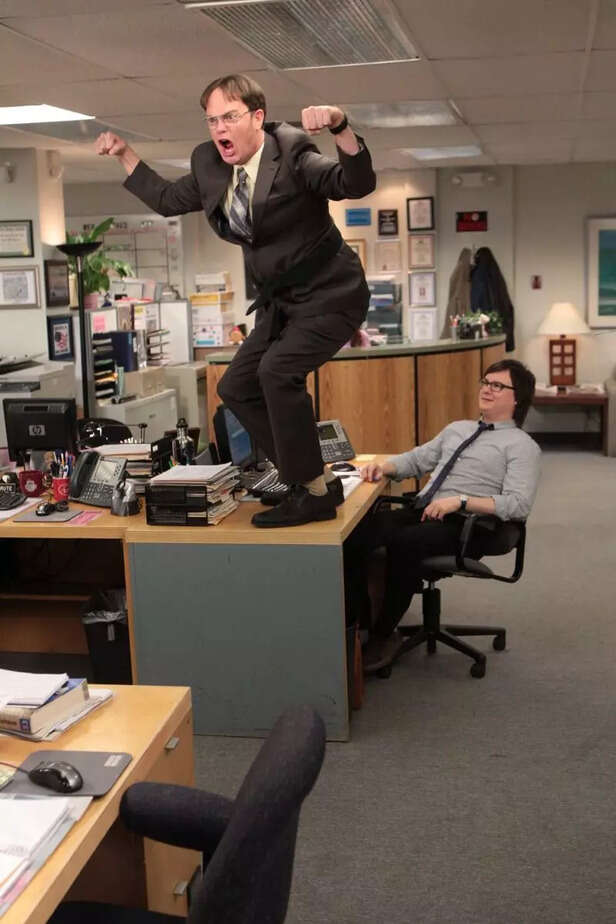
Image credit : Jio Hotstar | Employees log in as usual, attend key meetings and remain reachable, but deliberately reduce their output to the bare minimum required.
The idea gained traction after an online creator shared subtle strategies for managing low-energy days while still appearing present and professional. In a digital era where exhaustion is often worn like a badge of honour, the concept has struck a nerve.
What exactly is a soft off day?
This might mean starting the day slightly later than usual to ease into tasks instead of diving headfirst into pressure. Some choose to schedule or send early emails to create the impression of momentum, reducing the likelihood of follow-up demands later in the afternoon.
Automation also plays a central role. Meetings may be recorded or supported by transcription tools so that information is captured without requiring intense focus throughout. Notes are generated by software, ensuring nothing is missed while allowing the mind to rest.
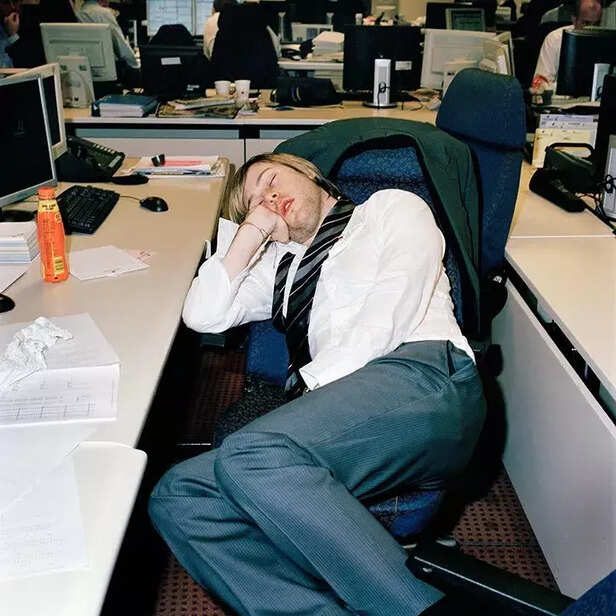
Image credit : Freepik | While a soft off day is not a substitute for proper rest, it can act as a pressure valve.
Importantly, boundary-setting becomes non-negotiable. Employees decline additional responsibilities, avoid unnecessary overtime and resist the urge to volunteer for extra projects. The principle is simple: protect energy before it fully depletes.
For remote workers, the strategy can be even more subtle. Staying logged in, responding selectively and maintaining online visibility help avoid scrutiny while scaling back effort.
Why professionals are embracing it
A soft off day acknowledges a difficult truth: productivity is not linear. There are days when concentration feels sharp and inspired. There are also days when even minor tasks feel overwhelming. Instead of pushing through exhaustion and risking deeper burnout, employees are choosing controlled slowdowns.

Image credit : Freepik | Employees are no longer waiting for organisations to fix systemic stress.
Mental health experts have long warned that sustained overwork can lead to emotional fatigue, reduced efficiency and even physical symptoms. While a soft off day is not a substitute for proper rest, it can act as a pressure valve. It allows individuals to remain engaged without spiralling into complete depletion.
A sign of changing work culture
There is a quiet rebellion in the idea. It challenges the assumption that visibility equals productivity. It questions whether constant intensity is truly sustainable.

Image credit : Freepik | Appearing busy while deliberately minimising effort could be perceived as deceptive.
At the same time, critics argue that soft off days may blur ethical lines. Appearing busy while deliberately minimising effort could be perceived as deceptive. The counterargument is that most professionals consistently exceed expectations on high-performance days. A soft off day simply balances the scales.
Is it a solution or a symptom?
If employees feel compelled to engineer unofficial recovery days, it suggests traditional structures are not adequately supporting mental well-being. The trend is both coping mechanism and commentary.

Image credit : Freepik | There is a quiet rebellion in the idea. It challenges the assumption that visibility equals productivity.
In many ways, the soft off day represents a modern compromise. It acknowledges responsibility while honouring human limits. It offers a small pocket of control in environments that often feel relentless.
As conversations around burnout continue to grow louder, the soft off day may remain less about doing less and more about surviving better.
Are soft off days the new sick leave at work?
By Saloni Jha

5 Bollywood movies for a complicated Valentine’s Day
By Nancy Jaiswal

The viral boyfriend notes trend
By Saloni Jha

Rawme Hooda went from low-key to viral real quick! Not just us, OGs like Yo Yo Honey Singh are vibing too
By Garima Satija

Hotpot spas are a thing! Not just relaxation, it's an experience
By Sneha Kumari

Elon Musk merges SpaceX, xAI and X in bold AI move
By Nancy Jaiswal

Japanese volleyball players's dramatic apology goes viral
By Bhupinder Singh
